
Seed Funding Fell 27%. Plan Your Raise Around It.
The Q2 2026 venture reports landed this week: record totals at the top, a 27% year-over-year drop in US seed and angel money at the bottom. Here is what the K-shaped market means for a first-time founder trying to raise right now.
What did the Q2 2026 venture reports just say?
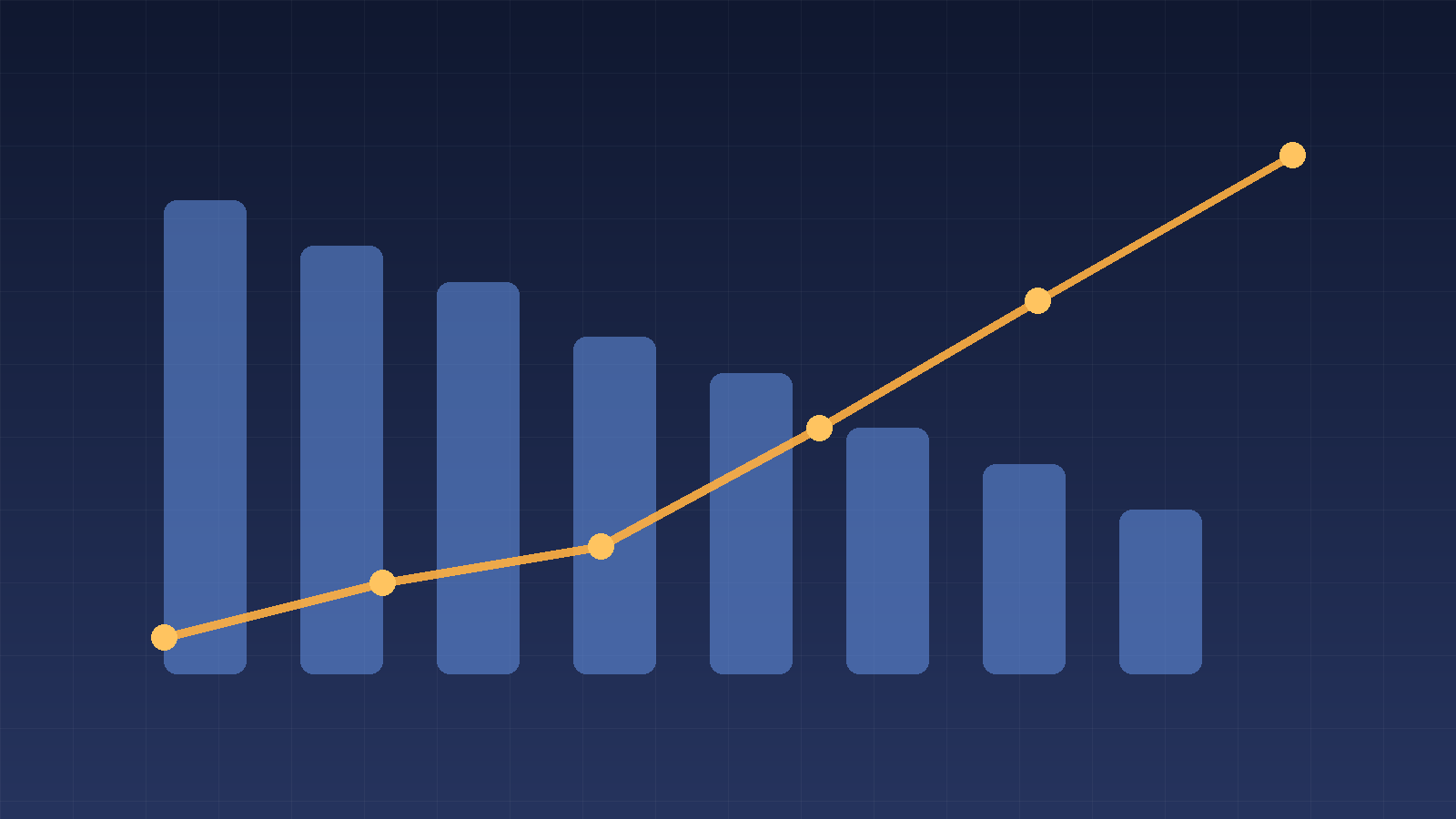
Two things at once, and they point in opposite directions. Global startup investment hit a record $510 billion in the first half of 2026, the biggest six-month total ever recorded. And US seed and angel funding fell to roughly $4.9 billion in the second quarter, down 15% from Q1 and down 27% from a year ago.
Read those numbers again. The headline says boom. The stage where you live says contraction.
Analysts are calling it a K-shaped market. The top arm of the K is AI mega-rounds, billion-dollar checks, and almost 90 new unicorns minted in six months. The bottom arm is everyone else: first-time founders, smaller funds, and seed rounds that used to close in six weeks and now drag for six months. Both arms are real. Only one of them is being written about, and it's probably not the one you're standing on.
Why is seed shrinking while totals hit records?
Because the money isn't spreading, it's stacking. Around 80% of Q2 venture investment across all stages went to AI companies, and a huge share of that went to a handful of enormous rounds. When SambaNova closes a billion-dollar Series F, the quarter's totals jump, but not one dollar of it touches the seed market you're raising in.
There's a supply problem underneath too. The investors who write first checks are themselves struggling to raise. Three firms (Andreessen Horowitz, Thrive Capital, and Founders Fund) collected 48.1% of all the capital that flowed into venture funds. First-time fund formation is on pace for its worst year since 2016.
Fewer new funds means fewer new seed investors, which means fewer people whose whole job is betting on unproven founders. That's the quiet mechanic behind the 27% drop, and it won't reverse this year.
What does capital concentration mean for your raise?
It means the middle of the market thinned out, so your target list has to be sharper.
Global seed still totaled about $12 billion in Q2, but look at the split: $2.8 billion of it went to seed rounds of $100 million or more. Those aren't seed rounds in any sense that applies to you; they're AI research labs wearing a seed label. Meanwhile about $5 billion went to rounds of $10 million and under, which is where actual first-time founders live.
So the real picture is this: the pool for normal seed rounds is smaller than the headline, but it's not gone. Checks are still being written every week. They're just coming from a more concentrated group of active funds and angels, and those investors can afford to be picky. Your job isn't to fight the market. It's to figure out what the remaining active investors need to see, and show up with exactly that.
Does slapping AI on your pitch change your odds?
Less than you'd hope, and it can backfire.
Yes, 80% of Q2 dollars went to AI. But seed investors have now sat through three years of AI pitches, and they've watched wrapper startups get crushed when a model update erased their product. The bar for an AI pitch isn't "uses AI" anymore. It's "has data, distribution, or workflow depth that survives the next model release."
If your product uses AI in a real way, say so plainly and show the retention numbers. If it doesn't, don't bolt it on. A boring business with 20% month-over-month revenue growth beats a vague AI story every time, in every market. Investors on the bottom arm of the K are looking for evidence, not vocabulary.
The unicorn list from this half actually proves the point: most were AI-related, but healthcare, fintech, and even a few crypto companies made it by being unavoidable in their niche.
Your AI co-founder is ready when you are.
Foundra turns everything in this article into an actual plan. Validation, customers, pricing, launch. In one place, in your voice, in an afternoon.
Get started→$39/month. Cancel anytime.
How much should you try to raise right now?
Less than the 2021 playbook said, and probably less than your ego wants.
In a contracting seed market, round size is a risk setting. A $3 million ask at a $15 million cap needs a lead who can write $1 million or more, and those leads are exactly who got scarcer. A $750K to $1.5M round can close entirely on angels and small funds writing $25K to $100K checks, and that path stayed open even while the totals fell.
Work backward from milestones, not from what a peer raised. What does it cost to get to the proof point that makes your next round obvious? Twelve to eighteen months of runway to hit it, plus a small buffer. That's your number.
And if the number is small enough that revenue could cover it? Take that seriously. The founders having the easiest conversations in 2026 are the ones who can walk away from the table.
What proof actually gets a seed check in this market?
Paying customers, retention, and a founder who knows their numbers cold. In that order.
Five years ago a seed deck could sell a vision. In Q2 2026, with fewer funds deploying and each one flooded with pitches, most seed investors want what used to be Series A evidence: real users, real revenue or unmistakable engagement, and unit economics you can defend line by line.
That last part trips up more first-time founders than anything else. When an investor asks what happens to your margin at 10x volume and you flinch, the meeting is over. Before you pitch, build the model: acquisition cost, pricing logic, margins, hiring plan, and what the round buys. A spreadsheet works fine. So does Notion, or a structured planning tool like Foundra that walks first-time founders through financial projections and the assumptions behind them section by section.
The founders who close in this market aren't the best storytellers. They're the ones whose numbers hold up under a bored partner's third question.
Where else can the money come from?
The seed crunch is a venture statistic, not a law of physics. Money still exists outside the K.
Angels are the obvious first stop, and they matter more now: operators who exited in the 2024-2025 M&A wave are writing checks, and they decide in days, not months. Then there's revenue itself, still the cheapest capital ever invented. Customer prepayments, annual contracts paid up front, and paid pilots all fund product without dilution.
Grants and competitions keep running regardless of venture cycles. And venture debt or revenue-based financing can stretch a small equity round further, though read the terms twice and never let repayments eat more than a modest slice of monthly revenue.
None of these replace a seed round if you're building something that needs years before revenue. But most first-time founders aren't building that. They're building software a customer could pay for in 90 days, and in this market that customer might be the best investor available.
How do you run a raise when there are fewer funds?
Tighter list, faster loop, more parallel conversations.
Start with 40 to 60 investors who have written seed checks in your sector in the last 12 months. Not five years ago; the fund that was active in 2021 may be quietly dead. Crunchbase and recent announcement pages tell you who's actually deploying.
Batch your outreach so conversations move together. The worst position in a thin market is one interested investor and no competing pressure; deals like that stall for months. Momentum is manufactured by scheduling, not luck.
Expect the process to take four to six months, and keep building the whole time. Nothing restarts a stalled raise like a new customer logo in the update email. Send those updates monthly to everyone who said "keep in touch," because in this market, "not now" often means "show me one more data point."
And set a stop-loss before you start: a date where, if the round hasn't come together, you switch to the revenue plan without drama.
Is this a bad time to start a company?
The data says something more interesting: it's a bad time to need venture money and a fine time to build.
Seed contraction hurts founders whose plan requires a check before anything works. It barely touches founders who can get to first revenue on savings and sweat. And the same AI concentration that's starving seed rounds has made building cheaper than it has ever been: a two-person team in 2026 ships what took a funded ten-person team in 2019.
There's also a contrarian edge hiding in the numbers. When 80% of capital chases one category, every other category gets less crowded. Less funded competition, cheaper talent in unfashionable sectors, customers still buying. Some of the best companies of the 2010s were seeded in the years right after 2008, when checks were scarce and only committed founders showed up.
The K-shaped market is real. But you don't have to stand on the arm everyone's fighting over.
Frequently Asked Questions
Is seed funding going to keep falling through 2026? Nobody knows, but the driver (fewer new funds forming) moves slowly, so a fast rebound is unlikely. Plan as if current conditions hold for 12 months. If it improves, you're pleasantly surprised.
Should I wait until the market improves to raise? Waiting works only if you can build meaningful proof in the meantime. Six more months of traction beats six months of hoping. If you can't make progress without capital, raise now with a smaller ask.
Do I need a lead investor for a small round? Under about $1.5 million, many rounds close party-style on SAFEs with no formal lead. It costs you a strong signal but saves months. Above that, a lead usually matters.
Are the $100 million seed rounds really seed rounds? Not in any way that applies to normal founders. They're large bets on frontier AI labs and repeat founders, labeled seed because it's the company's first round. Ignore them when benchmarking your raise.
What's the single best thing I can do before pitching this quarter? Get one more paying customer. In a proof-driven market, nothing in your deck works as hard as a real invoice.
Sources
- North American Startup Funding Shattered Records In First Half Of 2026 (Crunchbase News)
- Global Startup Investment Hit Record $510B In H1 2026 (Crunchbase News)
- Seed Funding’s 27% Drop Signals a K-Shaped Startup Market (Tech Times)
- Q2 2026 PitchBook-NVCA Venture Monitor (PitchBook)
- Almost 90 new unicorns have been minted so far this year (TechCrunch)
You just read the theory. Ready to build the thing?
Foundra is your AI co-founder. It turns an idea into a validated business plan, a go-to-market, and your first 10 customers. In an afternoon, not a semester.
$39/month. Cancel anytime. Works in 20 languages.